<img src="https://secure.tool3sign.com/182543.png" style="display:none;">
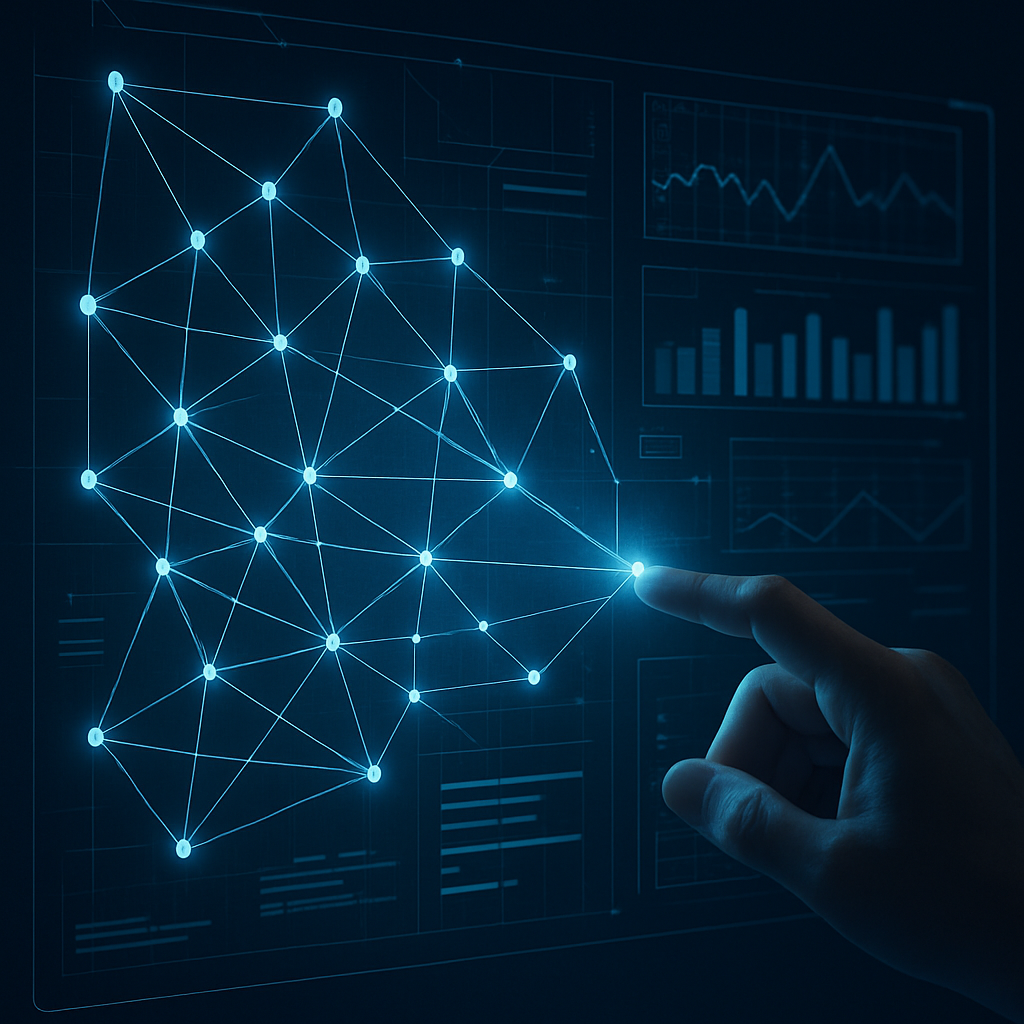
digital lines being connected in real time and beig analyzed-1

Event Streaming

Event streaming makes it possible to collect, process and analyse data flows in real time. This allows organisations to respond immediately to current events and make decisions based on what is happening now instead of retrospectively.

This is especially valuable in environments where data is generated continuously, such as applications and IoT landscapes with sensors and connected devices. By treating data as a continuous stream rather than separate snapshots, organisations lay the foundation for faster processes and agile, scalable IT architectures.

Collaborations that drive innovation

Thetford-Logo-White
Tonys-Chocolonely-Logo-White
Meijer-Potato-Logo-White.png
20260114_1419_Futuristic Data Cloud_remix_01keyahwhhfnjv15e1czw8g79t

What is Event Streaming?

Event streaming is a continuous data processing model in which events are processed at the exact moment they occur, rather than being collected and handled later in batches. Examples include an order being placed, a sensor detecting an anomaly or a user performing an action in an application, all of which generate individual events that become immediately available for analysis and action.

This approach allows organisations to treat data as an ongoing information source instead of a series of isolated snapshots, enabling decisions based on what is happening now. A key capability here is event stream processing: continuously analysing, enriching and interpreting incoming data streams without waiting times or batch intervals, so patterns can be detected, correlations identified and actions triggered the moment data arrives.

Moving data

How does Event Streaming work?

Event streaming keeps data continuously in motion, from event to action. When a machine raises an alert, a customer places an order or a sensor records a value, that event is immediately published to a message broker. The broker safely stores the event and makes it available to all systems that have subscribed to it.

Event consumers then process this data in real time. They detect patterns, enrich information or automatically kick off processes, resulting in direct actions such as alerts, workflows or real time updated dashboards.

The architecture supports scalability through principles such as CQRS for separating read and write paths, microservices for decoupled components and asynchronous communication for efficient processing.

Benefits of Event Streaming

Event streaming offers organisations powerful advantages that directly impact operations and innovation. By processing and interpreting data in real time, you can seize opportunities and manage risks at the moment they arise.

Real time insight and action

With event streaming, events are processed as soon as they occur. This gives organisations constantly up to date insight and makes it possible to react immediately to anomalies, opportunities or changes.

Faster decision making

By processing data continuously instead of in batches, event streaming shortens time to action. Processes, alerts and workflows are triggered automatically based on real time events, so decisions are always grounded in current information.

Scalable by design

Event streaming is built for high volumes and growth. Thanks to distributed processing and parallel execution, performance remains stable even as data volumes increase and environments become more complex.

Flexible, decoupled architecture

By connecting systems via events instead of direct integrations, you create an agile IT architecture. New applications and use cases can be added easily without disrupting existing integrations.

pexels-fauxels-3183197

Event Streaming vs. Event-Driven Architecture

Event streaming and Event Driven Architecture (EDA) are often used interchangeably, but they highlight different perspectives on the same space. Event Driven Architecture is a system architecture in which events act as the primary carriers of business logic. Instead of direct, point to point integrations, systems communicate via asynchronous events that signal a relevant occurrence. EDA focuses on design principles: how to keep systems loosely coupled, how to organise business logic around events and how to scale without tight dependencies between components.

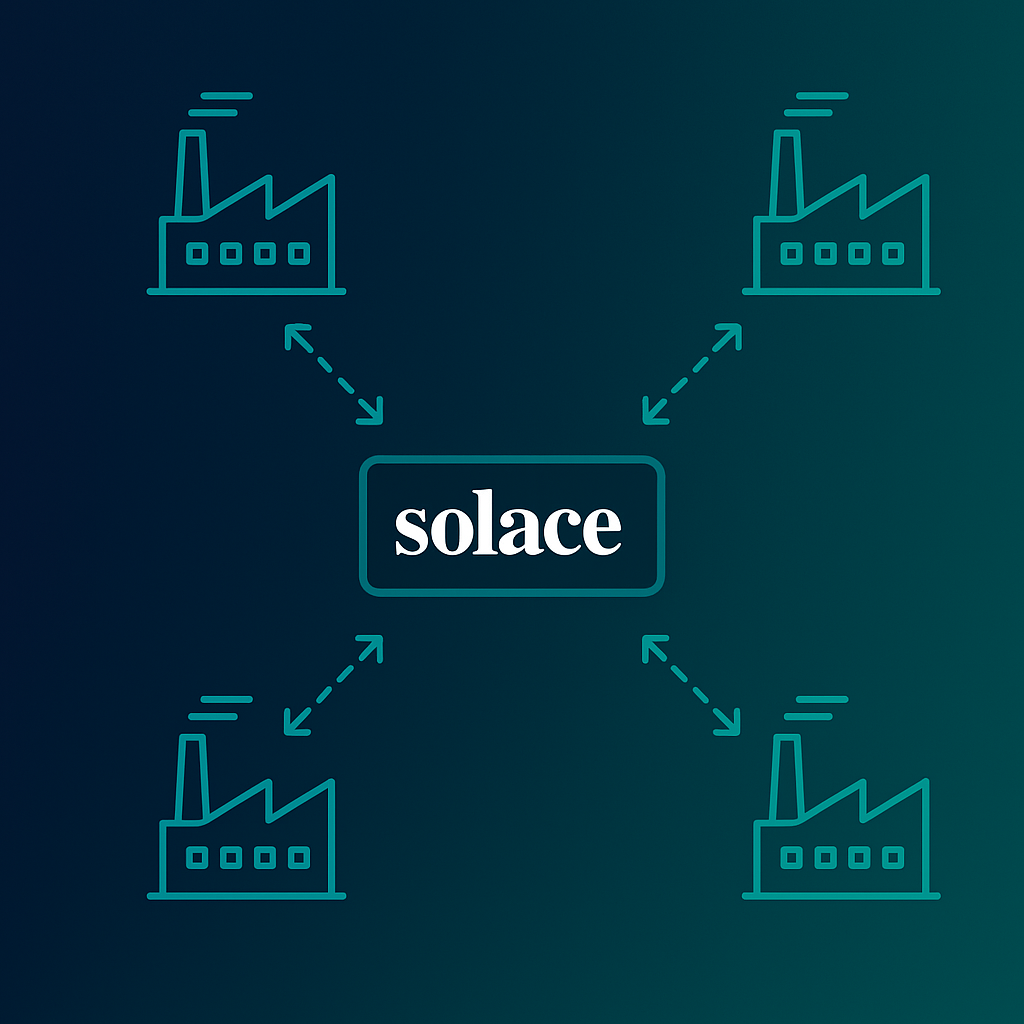
Event streaming is the technical implementation within this architectural frame, with a specific focus on continuous, real time processing of data streams. Where EDA defines the architectural principles and design choices, event streaming provides the underlying infrastructure and tooling to realise them in practice. For example, through an event broker such as Solace that enables reliable, scalable and secure distribution of events.

Solace-event-mesh

Solace

Event streaming with Solace enables organisations to use real time data in a structured and highly practical way. Solace provides fast, scalable and reliable event exchange between systems across both cloud and on premises environments, keeping applications decoupled while still allowing them to communicate instantly.

This creates a continuous flow of business events such as orders, notifications or sensor readings – that are immediately available for processing and routing to the right processes and applications. As a result, organisations can power real time dashboards, automated workflows and faster, data driven decision making.

Seamless integrations

Connect applications, data and processes into one coherent landscape so information flows smoothly through your organisation and silos are reduced.

Master Data Management

Bring all your core data together into a single trusted source of truth, so every department works with the same, up‑to‑date customer, product and supplier data.

IIoT

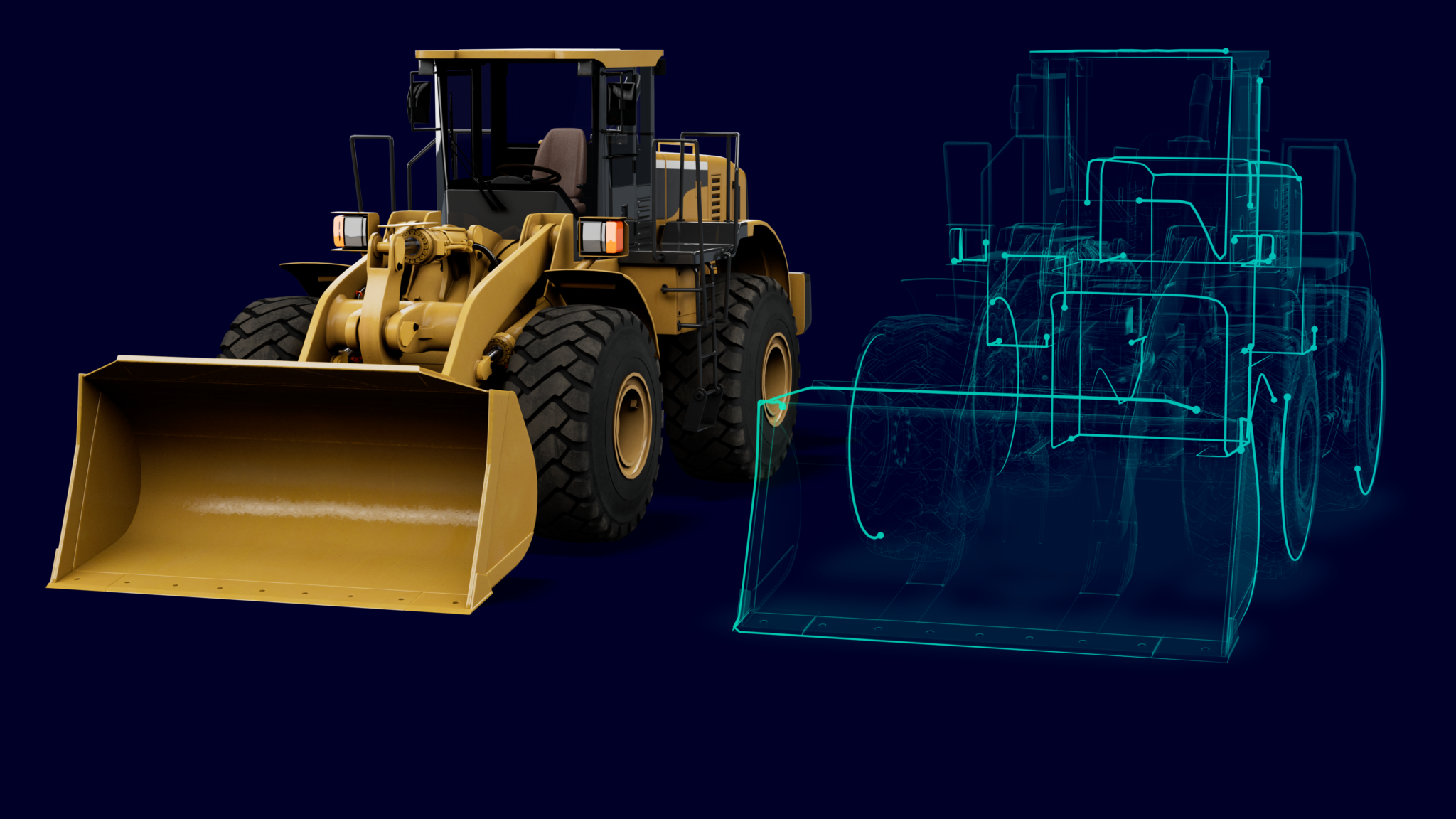
Discover how to connect your machines, sensors and systems with Industrial IoT and turn raw data into actionable insights for maintenance, quality and production optimisation.

FAQ

What is the concept of event streaming?

Event streaming is a way of continuously collecting, transmitting and processing data as a stream of events at the moment they occur, instead of retrospectively in batches. An event can be a new order, a payment, a sensor reading, a status change or a user click, all of which are immediately published and made available to multiple systems for monitoring, automation and analysis in (near) real time.

What is the difference between event driven and event streaming?

Event-driven and event streaming belong together, but have a different focus.

Event-driven is about architecture: systems are designed to respond immediately when an event occurs, such as a new order or a malfunction.

Event streaming is about the underlying technology: continuously recording, sending and processing those events in real time as a data stream, often with high volumes and the ability to read back or analyse the stream later.

Together, they ensure that events not only trigger an action, but are also available as a valuable, continuous source of information throughout the organisation.

Why is event streaming important?

Event streaming is especially valuable when organisations need to react in real time rather than processing data periodically in batches. It is widely used for continuous monitoring of machines and sensors, for order and customer processes that must immediately trigger follow up steps, and for feeding multiple systems simultaneously with the same up to date information.

digital-transformation-3-2048x1152

Discover how Emixa can transform your business

What is the concept of event streaming?

Event streaming is a way of continuously collecting, transmitting and processing data as a stream of events at the moment they occur, instead of retrospectively in batches. An event can be a new order, a payment, a sensor reading, a status change or a user click, all of which are immediately published and made available to multiple systems for monitoring, automation and analysis in (near) real time.

What is the difference between event driven and event streaming?

Event-driven and event streaming belong together, but have a different focus.

Event-driven is about architecture: systems are designed to respond immediately when an event occurs, such as a new order or a malfunction.

Event streaming is about the underlying technology: continuously recording, sending and processing those events in real time as a data stream, often with high volumes and the ability to read back or analyse the stream later.

Together, they ensure that events not only trigger an action, but are also available as a valuable, continuous source of information throughout the organisation.

Why is event streaming important?

Event streaming is especially valuable when organisations need to react in real time rather than processing data periodically in batches. It is widely used for continuous monitoring of machines and sensors, for order and customer processes that must immediately trigger follow up steps, and for feeding multiple systems simultaneously with the same up to date information.

Make real‑time insight part of your operations.