<img src="https://secure.tool3sign.com/182543.png" style="display:none;">
Data dashboard

Prescriptive Maintenance

In many organisations, maintenance is still largely reactive: a failure occurs, production comes to a halt and the maintenance team must intervene immediately. This approach structurally causes unplanned downtime, rising costs and pressure on delivery reliability and customer satisfaction.

Prescriptive maintenance (RxM) offers a more mature alternative. Instead of predicting failures, RxM turns data and analytics into concrete, actionable recommendations to prevent breakdowns. It shifts maintenance from a necessary cost centre to a strategic instrument for increasing availability, efficiency and service levels towards customers.

Collaborations that drive innovation

Aesseal-Logo-White
BAE-Systems-Logo-White
Saint-Gobain-Logo-White.svg
Machine data

What is Prescriptive Maintenance?

Prescriptive maintenance (RxM) is a maintenance strategy that not only predicts when a failure is likely to occur, but also recommends the best action to prevent that failure or minimise its impact. Where traditional systems mainly provide insight and warnings, RxM translates data into concrete decision proposals for planners, operators and maintenance teams.

RxM relies on AI, machine learning and IoT. Sensors in machines continuously collect data, algorithms detect patterns and risks, and on that basis the system proposes optimisations or interventions. This makes prescriptive maintenance the logical next step after predictive maintenance: not only predicting, but also prescribing what to do. Because the underlying models keep learning from new data and feedback from the field, RxM is scalable and adaptive, the more you use it, the smarter and more effective the maintenance process becomes over time.

Close up data gathering

How does RxM work in practice?

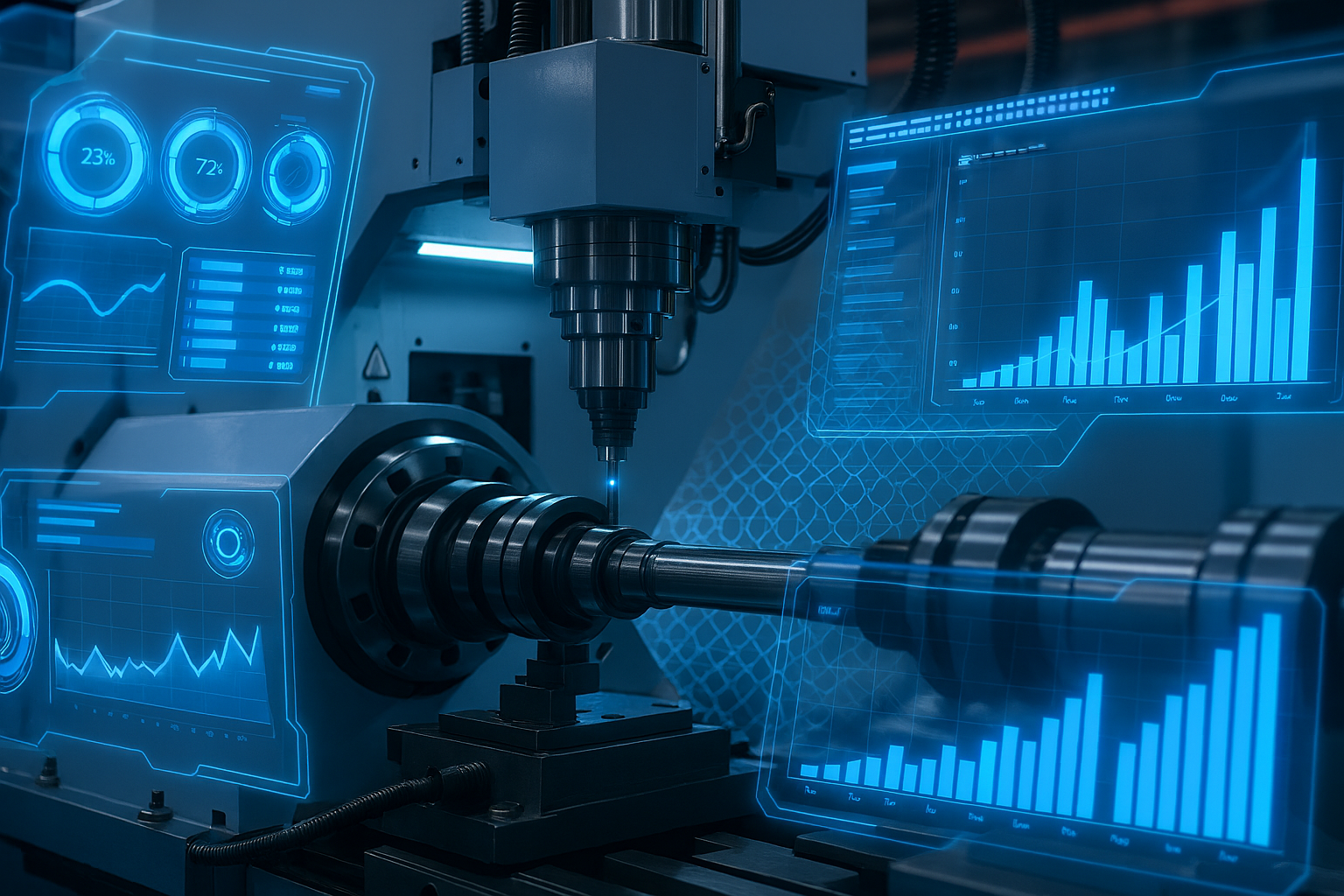
In practice, RxM starts with data from the field. Machines and installations are equipped with sensors that continuously capture information on vibration, temperature, pressure, energy consumption and throughput, which is sent in real time via IoT platforms to a central environment where data from different lines, locations and systems is brought together.

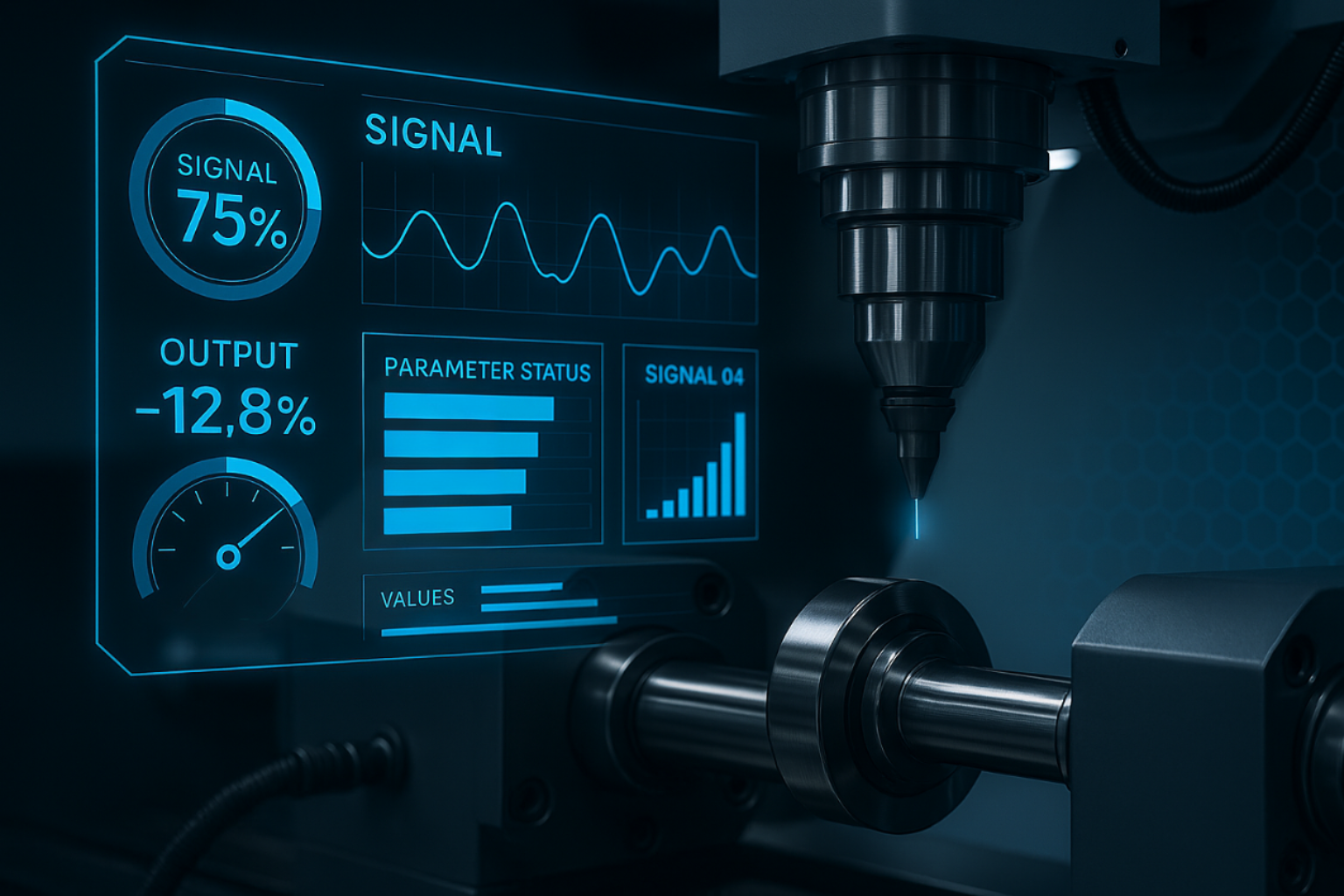
Machine learning models then analyse these data streams for patterns and anomalies and generate not just alerts, but action oriented recommendations: which intervention, at what time, with what priority. For example, if the system detects an abnormal vibration pattern in a pump, it can automatically propose recalibrating pump A within 24 hours to prevent a potential failure. To make this work effectively, smart integration is needed between OT systems (such as sensors and MES), IT systems (such as ERP) and analytics or cloud platforms so that data, decision logic and execution align seamlessly.

Futuristic data

When is it relevant for your organisation?

Prescriptive maintenance is especially impactful in environments where failures are immediately felt in operations and results. It is highly relevant for manufacturing companies with a lot of unplanned downtime, where every breakdown leads to rescheduling, overtime, and pressure on delivery reliability. It also comes into its own in complex machine parks with different machine types, ages, and suppliers, because it helps you cut through the noise of all the signals and parameters to identify the real risks. In addition, it is valuable for organisations that struggle with root cause analysis: failures keep recurring, but the underlying cause remains unclear or is very time‑consuming to uncover.

This approach is a good fit for organisations with clear digital ambitions, or those that have already taken steps towards condition‑based or predictive maintenance. Prescriptive maintenance builds on the foundations already laid there: sensor data, historical failure information, and analytics capacity. Rather than replacing these investments, RxM actually enhances them. While predictive maintenance mainly provides insight into when something might go wrong, prescriptive maintenance adds a crucial extra layer: targeted recommendations on which action to take, so that earlier predictive steps deliver more return and strategic value.

What does prescriptive maintenance deliver?

Prescriptive maintenance does not only provide technical benefits; it has a directly noticeable impact on operations, costs, and decisionmaking. The main outcomes are:

Higher uptime

By intervening earlier based on data and recommendations, the number of unexpected failures decreases. This translates into more stable production, fewer emergency repairs, and greater delivery reliability for customers.

Cost savings

Targeted interventions prevent costly consequential damage and last minute ordering of spare parts. As a result, maintenance shifts from incident driven and expensive to efficient, planned, and with a significantly lower total cost.

Less reactive maintenance

Maintenance teams spend less time on ad hoc failures and can work more from a well thought out plan. This reduces workload, improves collaboration with production, and makes the work more attractive for technical staff.

Data-driven decisions

Decisions on maintenance, replacement investments, and production planning are supported by facts rather than gut feeling. This helps management to better steer on risk, cost, and performance.

Insight into cause and effect

By continuously analysing data, it becomes clear which conditions lead to problems. This insight makes it possible to structurally optimise processes instead of fighting symptoms.

Manufacturing Execution System

Gain real‑time control on the shopfloor with a Manufacturing Execution System (MES) that connects people, machines and processes for higher productivity and quality.

Master Data Management

Create a single source of truth with Master Data Management, so every system and team works with consistent, up‑to‑date customer, product and supplier data.

Applications

Bring your business processes together with modern applications that are easy to use, integrate seamlessly and grow with your organisation.

FAQ

What is prescriptive maintenance?

Prescriptive maintenance (RxM) is a maintenance strategy that uses data, AI, and machine learning not only to predict disruptions but also to advise which concrete actions you should take to reduce risks or prevent downtime.

The system continuously analyses data from machines, sensors, and production processes, recognises patterns, and translates these into practical recommendations for maintenance and production teams. This makes maintenance predictable, easier to plan, and an explicit part of wider operational and strategic control.

What is the difference between predictive and prescriptive maintenance?

Predictive maintenance uses data to forecast when a failure is likely to occur, so you can plan maintenance before something breaks down.

Prescriptive maintenance goes a step further: it also provides wellfounded advice on which action you should take, at what moment, and with what priority.

Where predictive mainly offers insight, prescriptive actively supports decisionmaking and steers maintenance and production processes much more precisely.

What role does MES play in prescriptive maintenance?

An MES (Manufacturing Execution System) is an important link between the shop floor and the analytical layer of prescriptive maintenance. MES systems register production orders, material flows, downtime, and process parameters, creating context around machine sensor data.

By connecting MES with RxM solutions, recommendations can be not only technical (for example, replacing a component), but also directly linked to planning, batches, and line performance. This makes prescriptive maintenance much more executable in daytoday operations.

digital-transformation-3-2048x1152

Discover how Emixa can transform your business

What is prescriptive maintenance?

Prescriptive maintenance (RxM) is a maintenance strategy that uses data, AI, and machine learning not only to predict disruptions but also to advise which concrete actions you should take to reduce risks or prevent downtime.

The system continuously analyses data from machines, sensors, and production processes, recognises patterns, and translates these into practical recommendations for maintenance and production teams. This makes maintenance predictable, easier to plan, and an explicit part of wider operational and strategic control.

What is the difference between predictive and prescriptive maintenance?

Predictive maintenance uses data to forecast when a failure is likely to occur, so you can plan maintenance before something breaks down.

Prescriptive maintenance goes a step further: it provides a wellfounded advice on which action you should take, at what moment, and with what priority.

Where predictive mainly offers insight, prescriptive actively supports decisionmaking and steers maintenance and production processes much more precisely.

What role does MES play in prescriptive maintenance?

An MES (Manufacturing Execution System) is an important link between the shop floor and the analytical layer of prescriptive maintenance. MES systems register production orders, material flows, downtime, and process parameters, creating context around machine sensor data.

By connecting MES with Prescriptive Maintenance, recommendations can be not only technical (for example, replacing a component), but also directly linked to planning, batches, and line performance. This makes prescriptive maintenance much more executable in daytoday operations.

Take control of your maintenance decisions today.