
1.
Disconnected
Paper drawings, WhatsApp messages and Excel. Everyone has their own version of the truth. Change a design, and you have to re-enter data from scratch.
Sound familiar?
You're not alone.
Sound familiar? You're not alone.
21%
 Capacity lost to channel drift
36%
 Struggle to meet requirements
2-3 days
 Miss launch deadlines
⊣ Customers that Change ⊢
/COX-Marine-Logo-White.png)
/BAM-Logo-White.png)
/Saint-Gobain-Logo-White.svg.png)
/VolkerWessels-Logo-White.png)
/VORM-Logo-White.png)
The build starts on paper. It survives, or doesn't in the handoffs.
Construction never stands still, and neither do the pressures on it. A workforce harder to find and harder to hold. More complexity, tighter margins, clients expecting configure-to-order flexibility on traditional timelines. The pressure to industrialise, digitalise, and decarbonise all while the project schedule has to hold.
The problem isn't ambition. It's the gaps: between design and procurement, between factory and site, between the systems and chain partners your build depends on. That's where cost overruns hide, delays compound, and the plan stops being the plan. That's one of the hardest change challenges in construction. We should close the construction thread.

Prefabricated building has quietly turned construction into manufacturing. Components are designed in the office, made in a factory, and assembled on-site. That's the good news.
The bad news: most construction companies are still running that factory with spreadsheets, separate systems, and manual handovers. A design change in the office takes two days to reach the prefab yard if it reaches it at all. That's Stage 1 thinking in a Stage 3 world.
The fail isn't at the design desk or on the building site. It's in the handoff between them.
Every construction project runs on a chain of suppliers, subcontractors, prefab yards and site crews. Today that chain is held together by phone calls, PDF attachments and manual re-entry. One broken link a late component, a wrong version, a supplier who can't see the current spec and the whole project pays.
The Build Chain fixes the links. A modern iPaaS integration platform connects your ERP, your suppliers' systems, your prefab yard and your site management tool into one live network. Customer portals so your clients see progress in real time. Supplier portals so your vendors always work from the right drawing. Masterdata management so the same component number means the same thing everywhere.
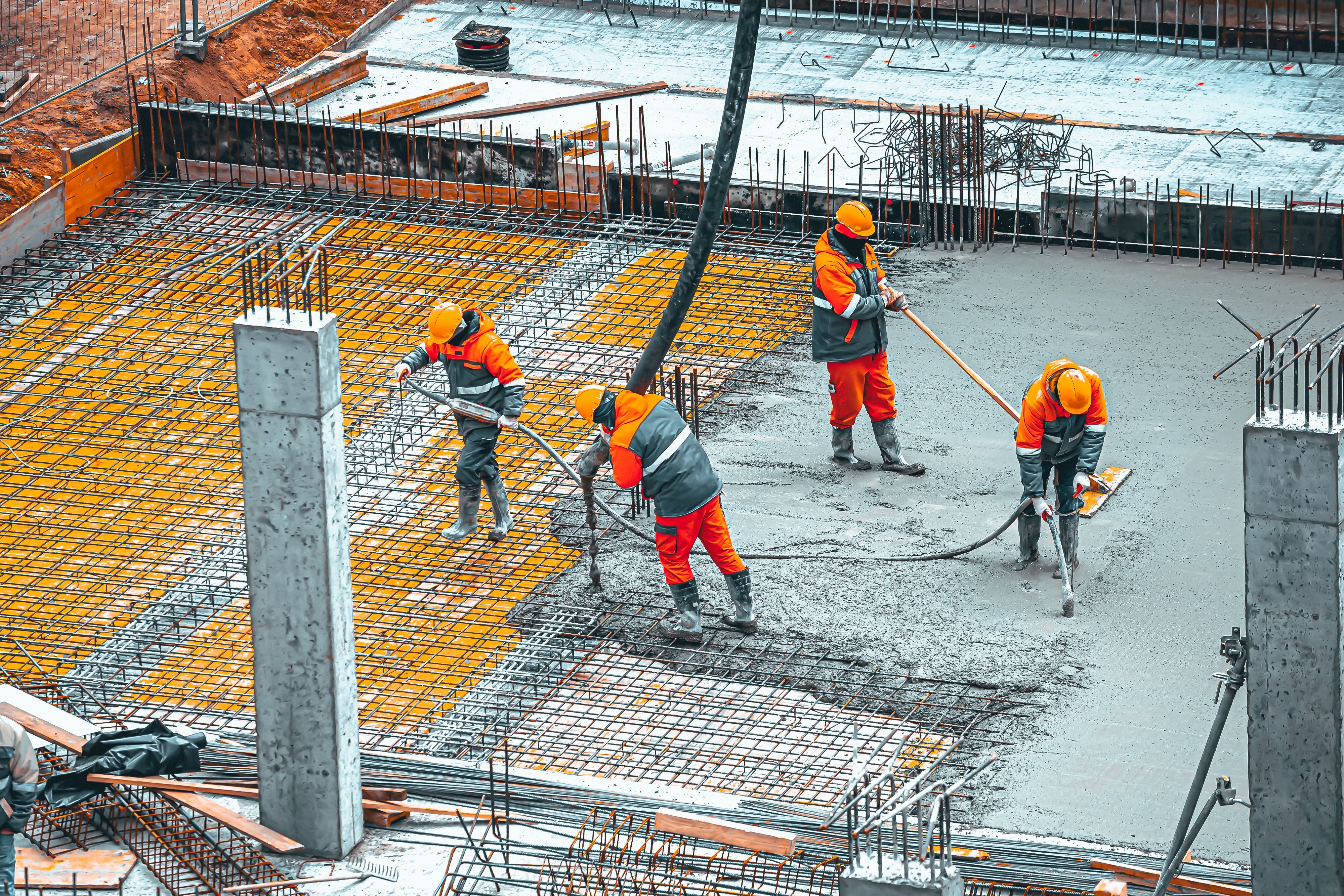

Your factory floor is your edge. The Construction Thread connects drawing, production and assembly — one version, everywhere, always current.

Electrical, HVAC and plumbing contractors bury their margins in change orders. A connected thread from design to commissioning stops that.
You manage hundreds of subcontractors. The Build Chain gives you one source of truth across all of them — before a single claim lands.

Roads, bridges, tunnels, utility networks. Your data needs to survive every handoff from engineering through operations — for decades, not months.

Grid operators and water authorities run long-life assets. The Construction Thread spans the full lifecycle build, operate, maintain from day one.

Complex, bespoke structures. You need configure-to-order without engineering from scratch.
Most prefab contractors have three problems they've learned to live with: the BIM model in one system, the component register in another, site planning in a spreadsheet. When a wall thickness changes, someone has to update all three. They usually get two out of three. The third causes rework.
Emixa connects your design software, your component register, your procurement system and your prefab yard into a single Construction Thread using Siemens technology that's been doing this in manufacturing for 30 years, now applied to construction. One change, everywhere, automatically.
What changes

At Stage 3, your internal systems talk to each other. At Stage 4, they talk to the world around them: your suppliers, your subcontractors, your clients, your prefab factory floor.
Emixa builds the Build Chain using modern iPaaS integration the same approach that replaced EDI in manufacturing, now applied to construction supply networks. A supplier portal so your vendors see the right spec the moment it changes. A customer portal so your clients see real progress, not a Monday morning report. IoT sensors on prefab components so quality is checked before anything reaches the building site.
The result: fewer defects, fewer delays, fewer claim disputes. And a project margin that holds.
What changes
Solutions, cases and contacts differ per region.

Solutions, cases and contacts differ per region.
Language

.jpg)



.svg)


